

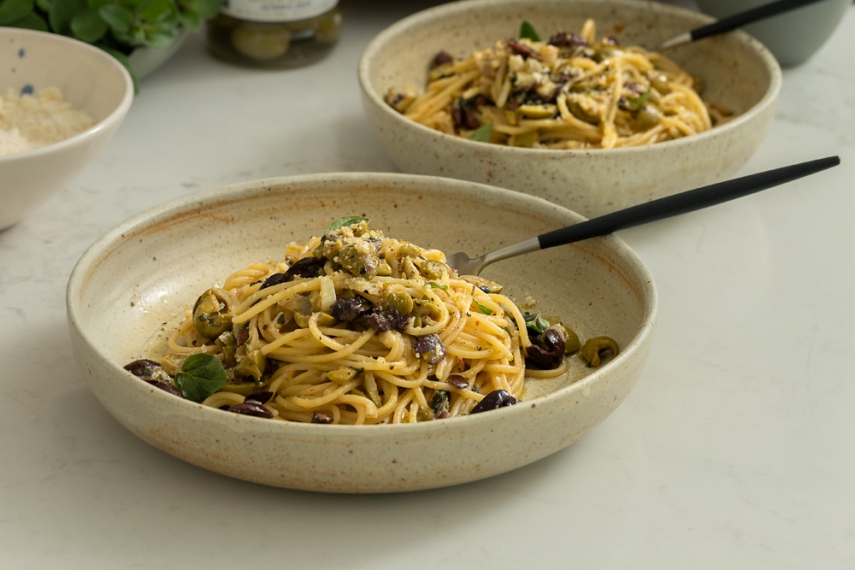

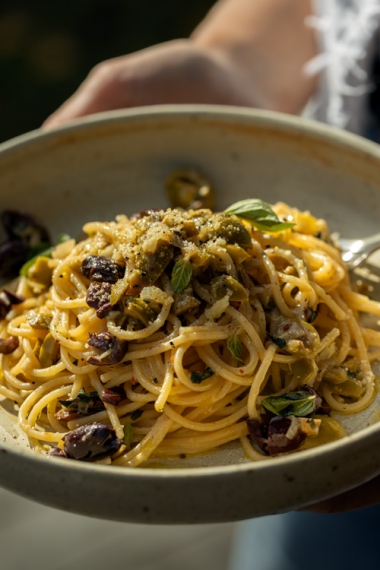

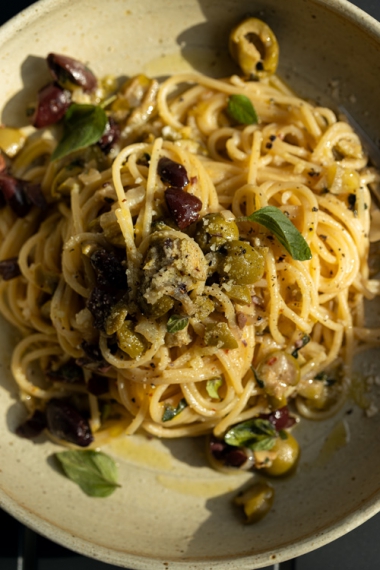

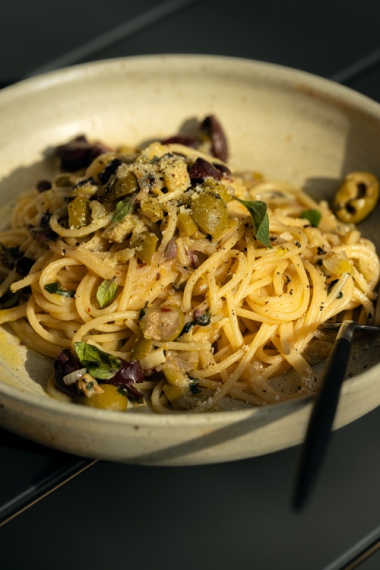

Three kinds of olives, one pan - this is my Triple Olive Spaghetti.
I start with a good extra virgin olive oil, sautéing shallot and garlic until fragrant, then in goes a mix of roughly chopped green and kalamata olives. The mild green olives work perfectly against the punchier, more vibrant kalamata - the best of both worlds.
A little lemon zest, fresh oregano, then the cooked spaghetti goes in with a splash of pasta water, tossed until silky and emulsified.
Off the heat, in with the parmigiano - and to finish, a generous drizzle of good-quality extra virgin olive oil. Bold, peppery, and full of flavour.
Restaurant-level pasta in twenty minutes. Save this one, you'll want it on repeat.

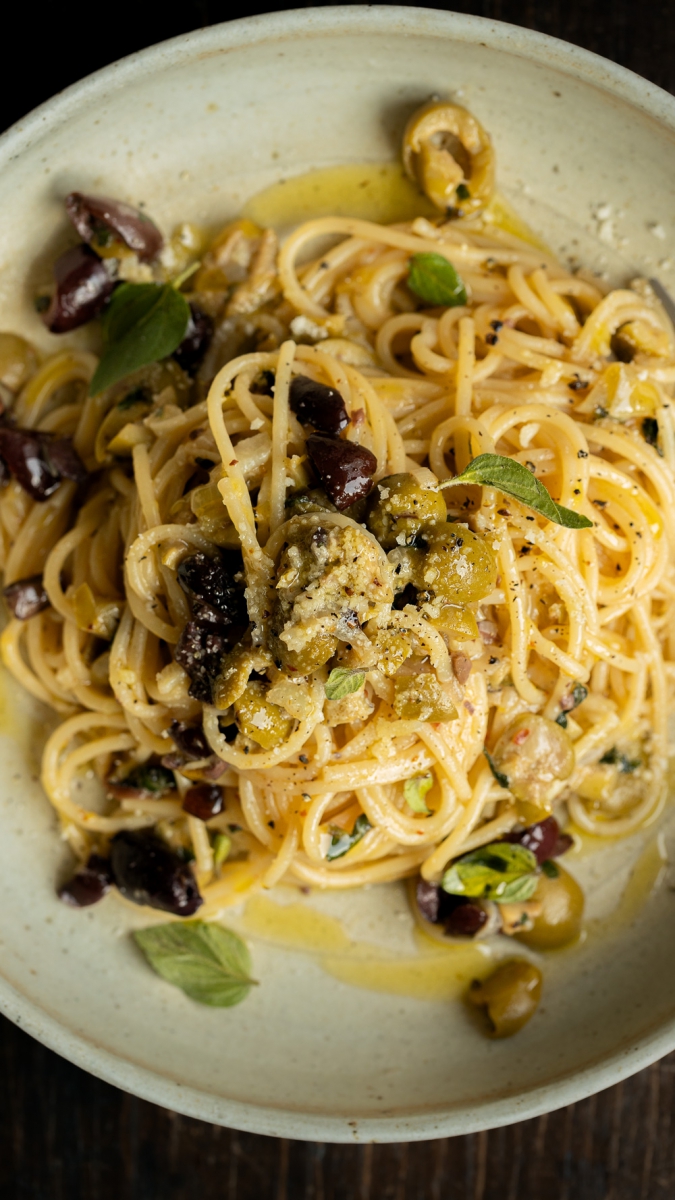
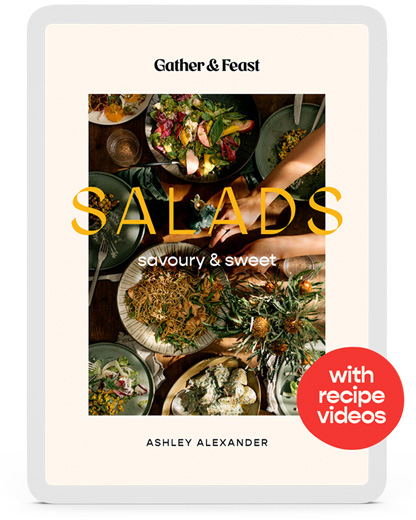
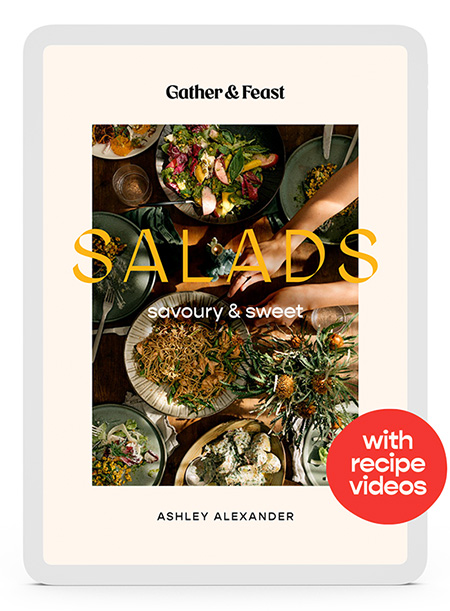
'SALADS' Recipe eBook
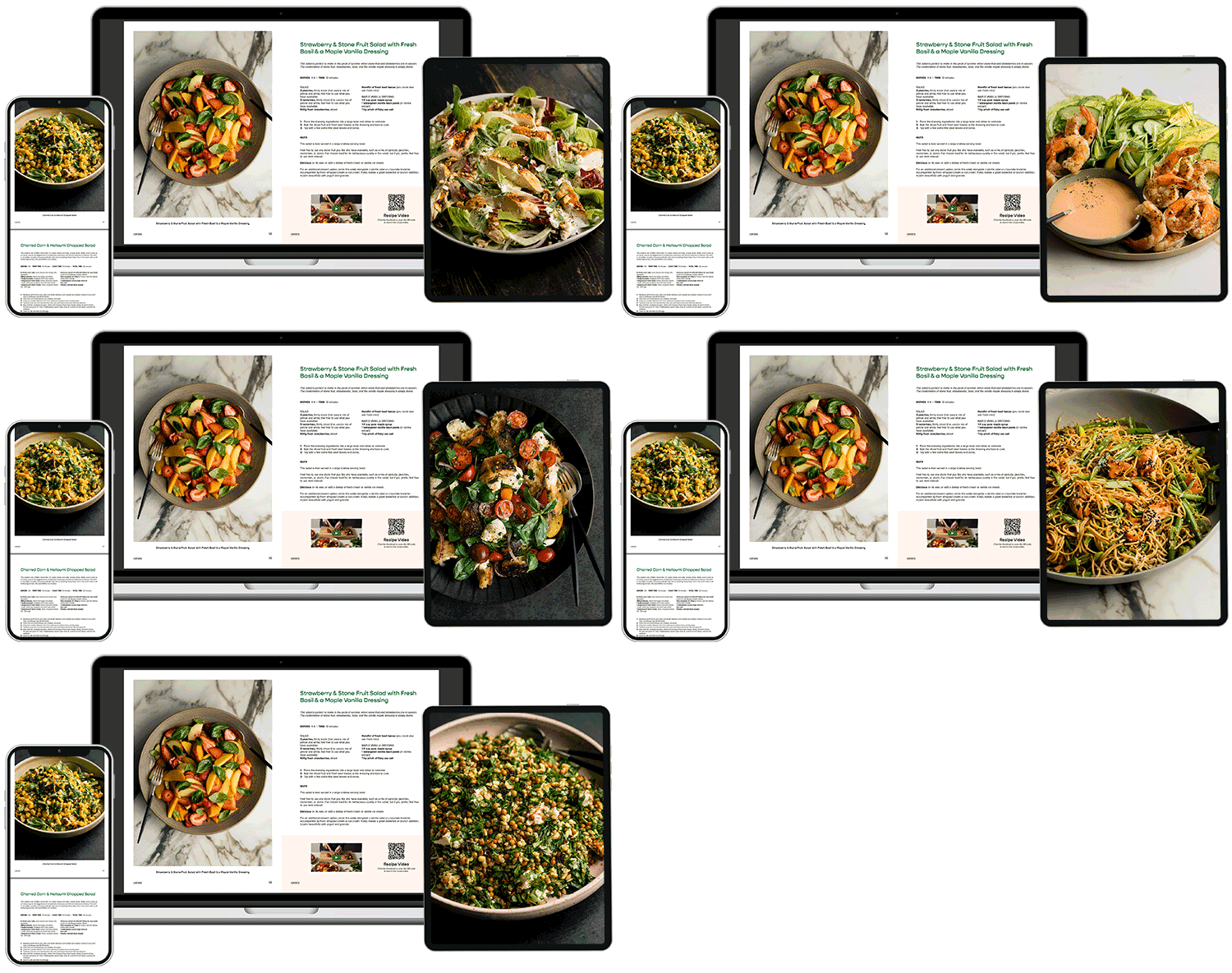
Made easy with step-by-step videos to guide you through each step and help aid in the food styling process.
Fresh, healthy, simple recipes every night of the week!

Ingredients
 Vegetarian*, Nut-free (*Traditional parmigiano reggiano is made with animal rennet. If you need this strictly vegetarian, swap in a vegetarian-style hard cheese)
  15 minutes preparation time + 20 minutes cooking time
  4
4 - 4 tablespoons good-quality extra virgin olive oil (I've used GAEA Organic Extra Virgin Olive Oil)
- 1 large shallot, finely diced
- 4 cloves garlic, finely sliced
- Pinch of dried chili flakes, to taste
- 140g pitted green olives, finely chopped (I've used GAEA Organic Pitted Green Olives)
- 65g pitted Kalamata olives, finely chopped (I've used GAEA Kalamata Pitted Olives in Pouch)
- A small handful fresh oregano leaves
- Zest of 1 lemon
- 40g finely grated parmigiano reggiano
- 350g good-quality dried spaghetti
- Good-quality extra virgin olive oil, for drizzling

Method
- Prep: Ensure all your ingredients are chopped and prepped and ready to go - this pasta comes together quickly.
- Cook the spaghetti: Place a large pot of water on to boil. Once boiling, salt generously and add the spaghetti. Cook it 1-2 minutes under the packet's suggested time - we want it just under al dente, as it will continue cooking in the pan.
- Build the sauce base: Place a large, deep-sided frying pan over medium heat. Add the olive oil, shallot, garlic and chili flakes, and sauté for about a minute until fragrant. Turn the heat down slightly if it starts to brown - we want the shallot and garlic soft, not sizzled.
- Add the olives: Add the chopped green and Kalamata olives, along with the fresh oregano and lemon zest. Sauté over medium-low heat while the spaghetti finishes cooking.
- Combine the pasta and sauce: Once the spaghetti is cooked, use long tongs to transfer it straight from the pot into the frying pan with the olive mixture, dragging some pasta water along with it. Alternatively, if you don't have long tongs, scoop out and reserve some pasta water, drain the pasta in a colander, then add it to the frying pan with a splash of the reserved water. Turn the heat to high and toss the spaghetti through the sauce, adding splashes of pasta water as you go to help cook the pasta and emulsify the sauce.
- Finish the dish: Once the spaghetti is al dente and the sauce is silky and emulsified, remove the pan from the heat. Add the parmigiano and toss to combine, adding a tiny splash of pasta water if needed to loosen the sauce, a little at a time. Taste for salt and adjust as needed - go easy, as the olives, pasta water and parmigiano all bring saltiness.
- Serve: Divide into bowls, drizzle with extra virgin olive oil, and finish with freshly cracked black pepper.
NOTES
- Don't add the parmigiano until the pasta is off the heat. Added while the pan is still hot, the cheese can seize and clump the sauce. Adding it off the heat keeps everything smooth and emulsified - loosen with a tiny splash of pasta water if needed, a little at a time.
- Hold off on salt until the very end. Between the olives, pasta water and parmigiano, there's already a fair bit of salt built into this dish - taste right before serving and adjust from there.
- Save more pasta water than you think you'll need - it's the easiest way to bring the sauce back together if it looks tight or split.
- Traditional parmigiano reggiano is made with animal rennet. If you need this dish strictly vegetarian, swap in a vegetarian-style hard cheese. It can also be made gluten-free with your favourite GF spaghetti; can be made dairy-free/vegan by omitting the parmigiano or using a plant-based alternative.

Free Resources
Click on the links below to print or save this recipe to your device.